The modern butcher is the upcoming "food designer"
Enzo Sisto 14 april 2026
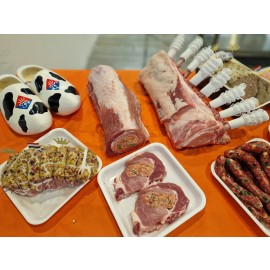
Parma, where barbecue meets tradition.
The birth of a new meat paradigm: the modern butcher is the upcoming "food designer".
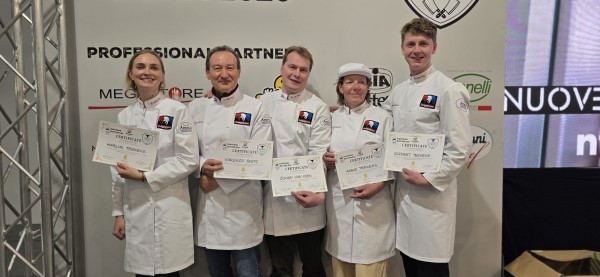
Proud to have participated as the Dutch representative team in the international four-team butcher art competition at the Butcher Show at Fiere di Parma, thanks to the organization of the Italian National Butchers Team. Here below the Dutch Butchers Team : Marlouk Teekens, Enzo Sisto, Johan van Uden, Adele Teekens, Eijmert Teekens .
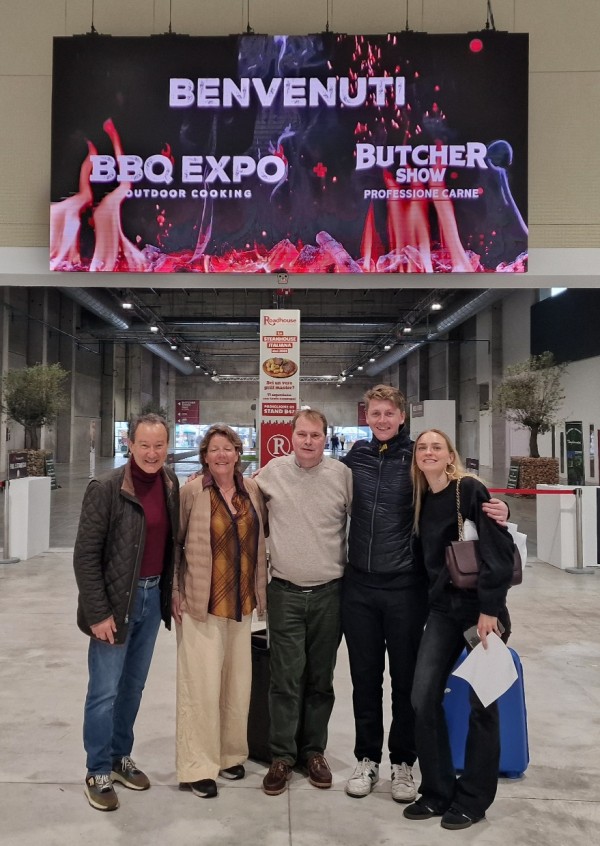
In April 2026, Parma was not simply the host city of a trade fair, but the place where a structural change in the meat world became clearly visible. BBQ Expo and Butcher Show represented the convergence of two worlds that until a few years ago had remained separate: on one side, traditional European butchery; on the other, barbecue culture, rooted mainly in the Anglo-Saxon world.
This meeting was neither accidental nor superficial. It was the result of a deep transformation in consumption patterns, professional skills, and the economic logic of the meat supply chain. Parma offered the ideal setting for this synthesis: a city with a strong gastronomic identity, capable of combining tradition and innovation.
The event brought together more than 300 exhibitors for BBQ Expo and around 150 for Butcher Show, attracting a diverse audience of enthusiasts, industry professionals, buyers, chefs, distributors, and innovators. This mix created a unique ecosystem in which meat was no longer seen only as a raw material, but as a cultural, technical, and economic product.
From traditional butchery to the finished product: a silent revolution
The central point of this transformation is the shift from a logic of “cutting and selling” to one of “product design.”
In traditional European butchery, the butcher’s role has historically been linked to anatomical knowledge of the animal, cutting precision, and preservation. Value lies in the quality of the raw material and in the ability to process it properly.
Barbecue introduces a radical change: value shifts toward transformation. It is no longer enough to cut meat well; it must also be interpreted. Techniques such as marinating, smoking, slow cooking, and fire management become integral parts of the process.
In Parma, this evolution was evident. The butcher is no longer just a cutting technician, but becomes a complete professional, capable of:
-
selecting the raw material
-
designing the cut according to the cooking method
-
developing recipes and preparations
-
communicating the product to the consumer
In other words, the butcher becomes a “food designer.”
New cuts, new economies
One of the most important effects of the meeting between barbecue and butchery is the revaluation of cuts.
Barbecue has introduced a new hierarchy of meat in Europe. Cuts traditionally considered secondary or less noble in Italy, such as brisket, ribs, or pork shoulder, become central thanks to long cooking techniques.
This has huge economic implications:
-
increased value for less prestigious parts
-
reduction of waste
-
greater balance in the valorization of the whole carcass
The modern butcher no longer sells only steaks or fillets, but offers complete solutions:
-
ready-to-use BBQ kits
-
marinated preparations
-
gourmet products ready for cooking
Parma clearly showcased this evolution, with stands and demonstrations where the final product was often already “designed” for the consumer, rather than simply displayed as raw material. Here below the Dutch Team
The spectacular dimension: from the butcher shop to the arena
Another key element is the transformation of butchery into an experience.
Traditionally, the butcher’s work takes place behind the counter, away from the public eye. BBQ overturns this logic: fire, meat, and preparation become part of a show.
In Parma, this translated into:
-
live cutting and preparation
-
showcooking
-
visually striking presentations
-
direct interaction with the public
European Butcher Day perfectly represents this transition.
European Butcher Day: beyond competition
According to the official regulations, European Butcher Day was conceived not as a contest, but as a moment of cultural and technical exchange among butchers from Italy, the Netherlands, Romania, and Spain.
This choice is significant. In a historically competitive sector, it introduces a model based on collaboration and sharing.
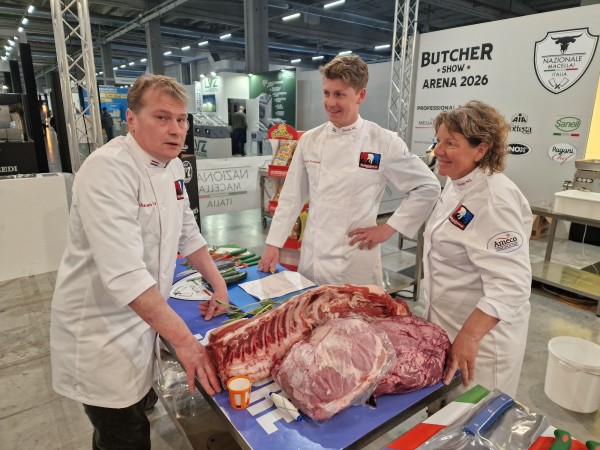
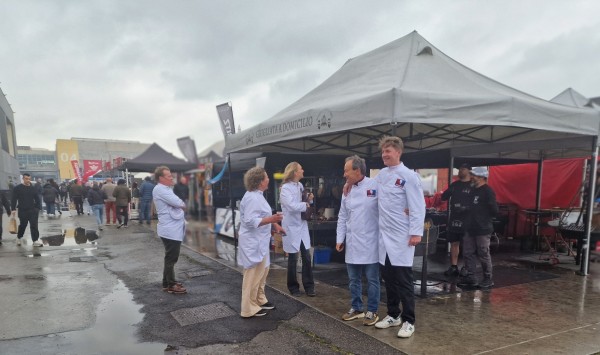
Here below three of the five members of the Dutch Team, Johan van Uden- Eijmert Teekens - Adele Teekens, discussing about the processing of the show.
The day was structured as follows:
-
initial technical briefing
-
operational activities in the arena
-
shared lunch
-
open training session
Five professional workstations hosted teams of two participants, often from different countries, to encourage European integration.
The tasks were based on improvisation:
-
two types of sausage
-
six gourmet preparations
-
two traditional
-
two innovative
-
two BBQ-oriented
-
There were no judges, rankings, or awards. The objective was visual and technical comparison.
This approach represents an important cultural break: value lies not in winning, but in shared growth.
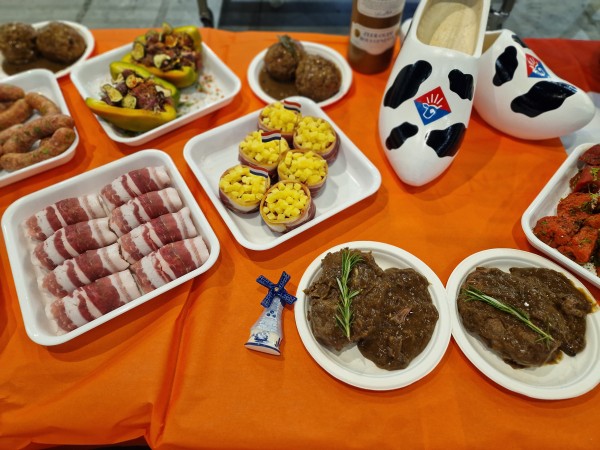
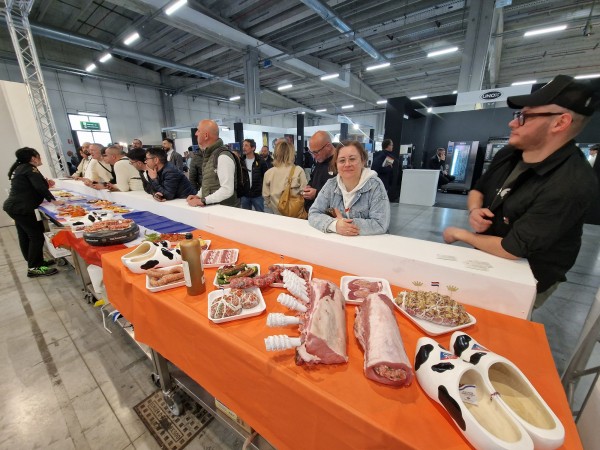
Dutch “food design” creations:
Among the products presented during the event, several preparations stood out for combining technique with gastronomic identity:
• “Van Gogh,” a multilayer composition of potato and veal, enriched with aged Dutch Old Amsterdam cheese;
• stuffed bell pepper with liver and veal, red onion, and Mediterranean herbs;
• veal pâté, balanced and versatile, designed for aperitifs and gourmet preparations.
With this first participation, the Netherlands marks its official entry into the international butchery circuit, supported by a supply chain focused on quality, innovation, and the valorization of the craft.
The four-nation event: a symbol of openness
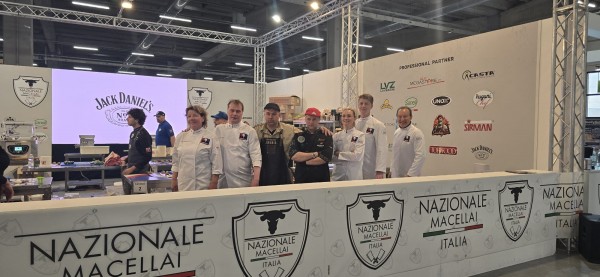
Within the event, the four-nation meeting between Italy, the Netherlands, Romania, and Spain carried strong symbolic meaning.
In particular, the participation of the first official Dutch team marks a historic step.
The team, supported by Ameco - member of the Van Drie Group, and made up of the Teekens family en Johan van Uden (Chateaubriand Heemstede) , accompanied by Enzo Sisto, made its international debut in a highly qualified context.
The combined use of beef and Van Drie veal highlighted advanced technical ability and an innovation-oriented mindset.
The result, with the achievement of a certificate qualifying the team as a candidate for the 2027 European Championships, ...and who knows, perhaps even the World Butchers’ Challenge in Australia in 2028.
The Dutch team performace shows how even emerging teams can quickly position themselves on the international stage.
Below is the award ceremony and the words of Enzo Sisto, External Relations Commissioner.
Parma as a European model
The real value of Parma lies not only in the event itself, but in the model it represents.
Unlike other contexts:
-
it is not just a trade fair
-
it is not just a competition
-
it is not just an event for enthusiasts
It is an integrated platform where:
-
the butcher learns from the pitmaster
-
the pitmaster learns from the butcher
-
the buyer observes finished products
-
the consumer lives an experience
This creates a new professional ecosystem.
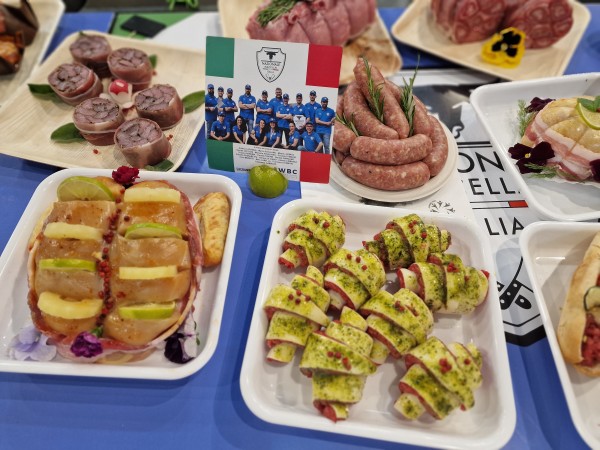
Here below the Italian Team's "food design". Very interesting the "meat croissant".
The comparison with France: the world championships of butchery
To fully understand the significance of Parma, it is useful to compare it with the past 2025 World Butchers’ Challenge in Paris.
This event represented the highest competitive level in the sector.
With around 150 butchers from 16 countries, more than 6,000 spectators, and tons of meat processed, it was truly the Olympics of butchery.
The disciplines include:
-
team competition
-
young butcher category
-
apprentice category
The main challenge consisted of the complete transformation of different animal species within a limited time, with the creation of a theatrical display counter.
The judging criteria are strict:
-
technical precision
-
commercial yield
-
creativity
-
aesthetics
-
teamwork
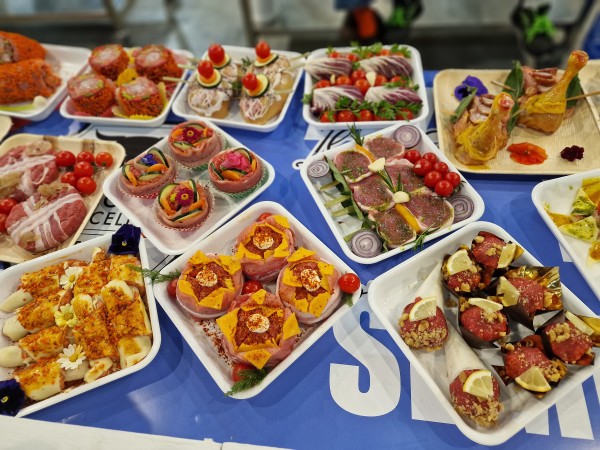
Here up the Romenian "food desing". Really interesting.
Two models compared
The comparison between Parma and the World Challenge in Paris highlights two different yet complementary approaches.
Paris represents:
-
technical excellence
-
pure competition
-
high standardization
Parma represents:
-
cultural cross-pollination
-
market openness
-
integration between different worlds
Both are necessary.
Competition raises the technical level.
Cross-pollination creates innovation and new economic opportunities.
Toward the future of the profession
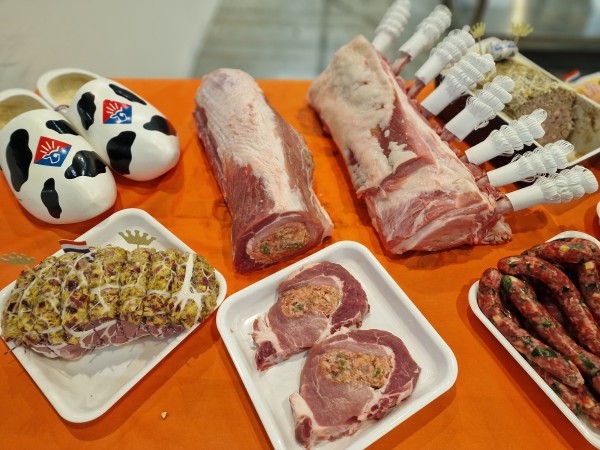
The real change lies in the figure of the butcher.
He is no longer only:
-
an artisan
-
a cutting technician
He becomes:
-
a product creator
-
a cooking expert
-
a communicator
-
an entrepreneur
BBQ accelerates this transformation because it introduces:
-
direct relationship with the consumer
-
storytelling
-
experience
Parma has shown that this evolution is already underway.
Conclusion departing from BBQ Expo - Butchers Show Parma 2026
The meeting between BBQ and traditional butchery in Parma marks the beginning of a new phase for the meat sector.
This is not simply a trend, but a structural change:
-
in the way meat is processed
-
in the way it is sold
-
in the way it is told
The world championships in France has showed the peak of technical excellence.
Parma shows the direction of the future.
A future in which the butcher is no longer only the guardian of a tradition, but the protagonist of a dynamic, creative, and internationa system.
Back to Milan to take the plane: we stop at Ristorante Galleria in the famous Galleria Vittorio Emanuele.
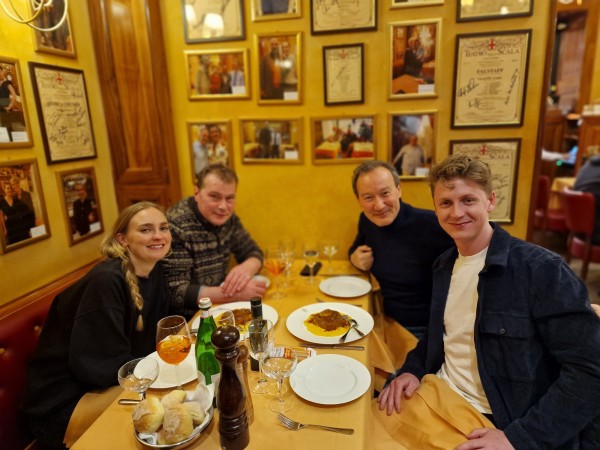
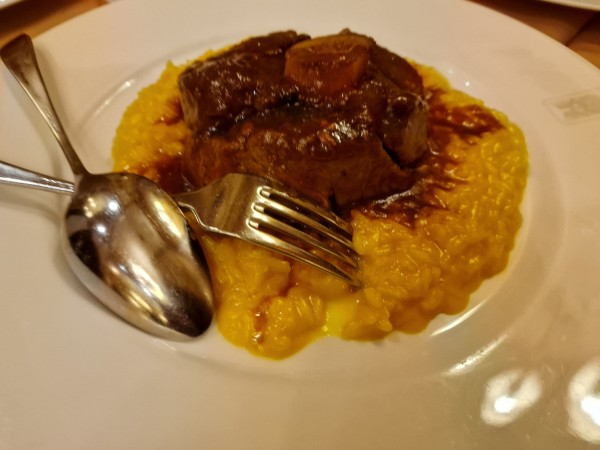
A special dinner: classic "risotto milanese con ossobuco di vitello".
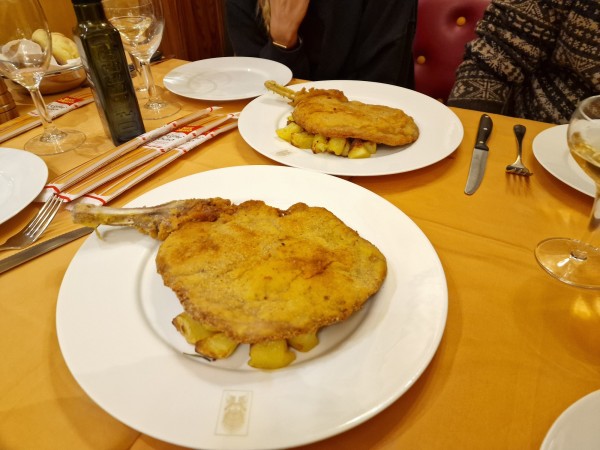
"Cotoletta alla milanese" better known as "elephant ear"
Take care !
Gerelateerde blogs
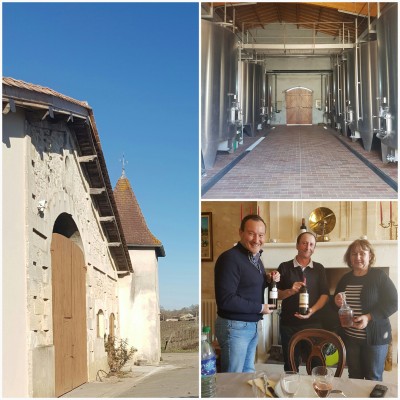
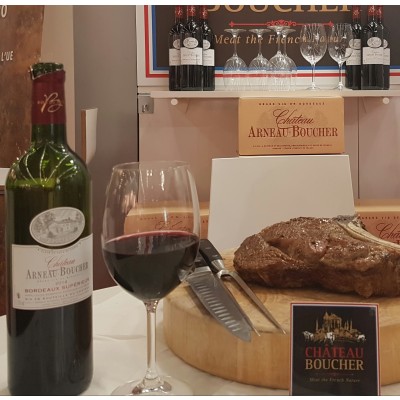
The Chateau Arneau Boucher tradition
Enzo Sisto 8 januari 2017
For over 4 generations the SARTRON family lives in Perrissac in the area called "La Tour Blanche". A tradition that shows the love for this art of Bordeaux vineyards.
AMSTERDAM January 13-15th 2020. First impressions Horecava short movie
Enzo Sisto 16 januari 2020
- WOW...a gourmet restaurant should be jealous about our MENU on the stand during the HORECAVA! Enjoy this first short film impression.
Paris october 20th 2016
Enzo Sisto 20 oktober 2016
The SIAL in Paris has been a very important event for CHÂTEAU BOUCHER. From every European country everyone agrees with the new concept "La viande avec son vin".